Discography
Goldberg variations album 2026
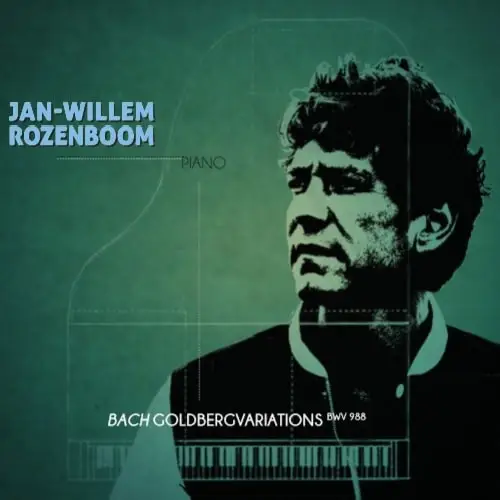
The new recording of the Goldberg Variations by JW Rozenboom is here.
JW Rozenboom plays Bach Seven Transcriptions
The CD order will be shipped on March 18.
“Over the past two years, I have been exploring how Bach composes polyphonic music when he is not writing for keyboard/piano. That idea began with the soprano aria from Cantata BWV 115, Mache dich, mein Geist, bereit. This piece made such a deep impression on me that I wanted to discover the structure of this composition. This search resulted in a combination of the different instruments in a single piano score. And that is where the difficulty arises: Bach can often concentrate polyphony for different instruments in a very small area. The different timbres of the instruments ensure that each part remains clearly audible. If you want to play these parts on the piano, you have to be very aware of the development of each voice, so that each part remains clearly audible."
- Prelude pour la Luth. Ò Cembal BWV 998
- Largo from Violin sonata no. 3 in C major BWV 1005/3
- Aus Liebe will mein Heiland sterben, Soprano aria from Matthäuspassion BWV 244
- Ich ruf’ zu dir, Herr Jesu Christ BWV 639
- Mache dich, mein Geist, bereit, Soprano aria from Cantate BWV 115
- Chaconne from the Partita in D minor for Violin solo BWV 1004/5
- Vor deinen Thron tret ich hiermit BWV 668
Bonus track
8. Fuga in G, on the theme of the song “Brabant” (composition JW Rozenboom)
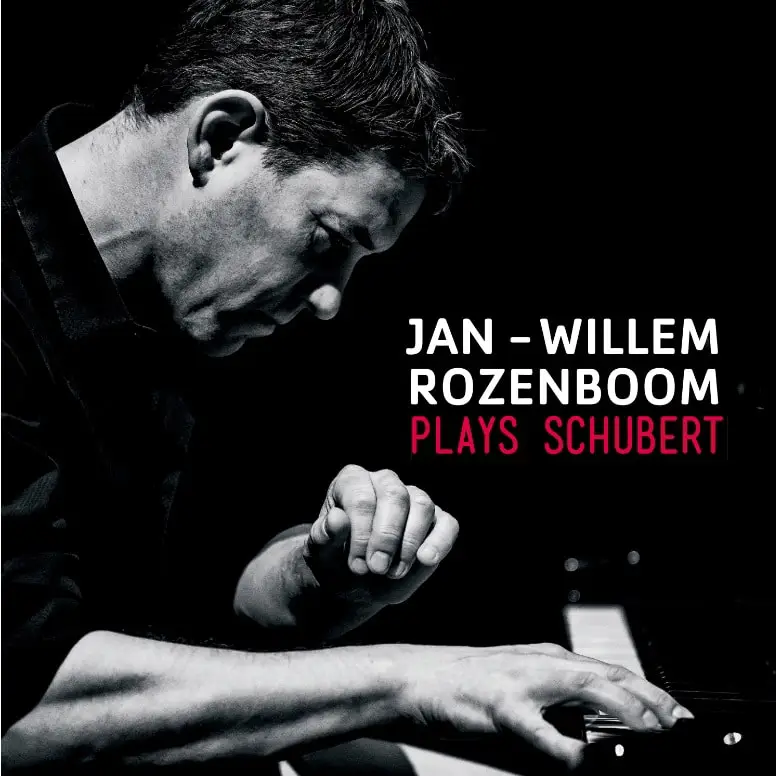
Jan-Willem Rozenboom Plays Schubert
After Rozenboom released a successful recording of the Goldberg Variations in 2015, he has now made new recordings (double CD) featuring only Schubert repertoire.
Rozenboom is a huge Schubert fan; his father and grandfather, who had the composer's piano repertoire on their pianos from an early age, instilled in him this passion.
Since he was 10, he has been playing the impromptus and dances, which, after 30 years of maturation, have now acquired added depth.
These recordings are unique because Rozenboom took the time to get his instrument to sound its best in a space with excellent acoustics: the chapel of the Mariadal Monastery in Roosendaal.
From a very lyrical Schubert in Liszt's song transcriptions and a subdued Schubert in the four impromptus opus 90 to a frivolous Schubert in over 20 dances to a virtuoso, extrovert Schubert in the Wandererfantasie.
Goldberg variations
It seems like a fairy tale, and perhaps it is. Legend has it that the composer J. S. Bach wrote 30 variations on an aria at the request of a Russian count suffering from persistent insomnia. The count then had a young musician in his service, Johann Gottlieb Goldberg, play the variations to ease the burden of his sleepless nights. The pieces composed by Bach, published in 1741, would henceforth bear the name of their interpreter: the Goldberg Variations. The result is a masterpiece, the performance of which also requires the hand of a master.